Hazardous trees
Dead, dying, damaged or compromised trees that threaten homes, outbuildings, fences, roads, animals or active areas.

Rural properties · acreages · farms · difficult access
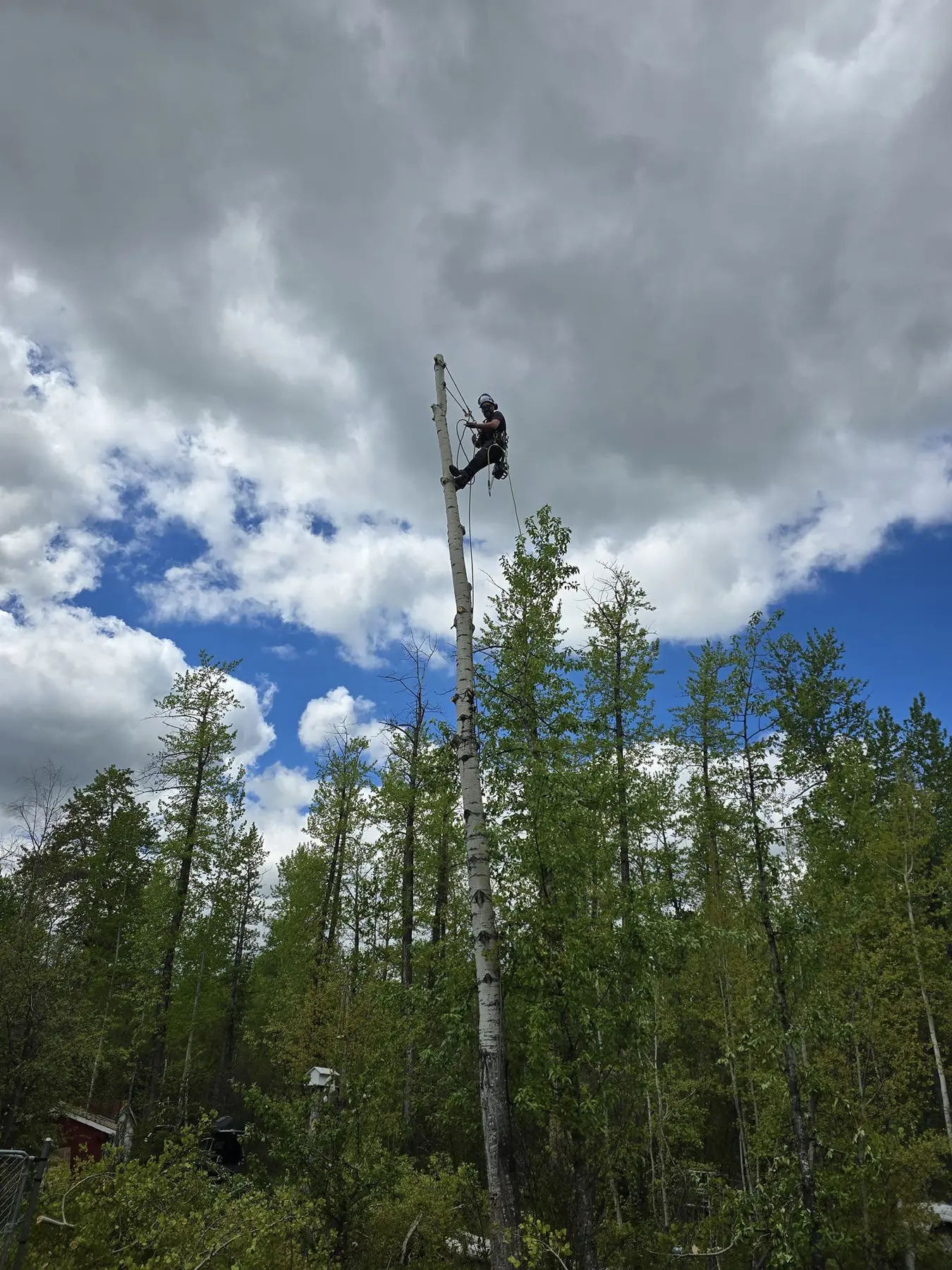
Danger trees are our kind of work: climbing, rigging and skilled felling for dead, unstable, oversized, storm-damaged or fire-affected trees around rural homes, outbuildings, livestock areas and access routes.
The right plan for the tree
A tree does not need to be enormous to create a high-consequence job.
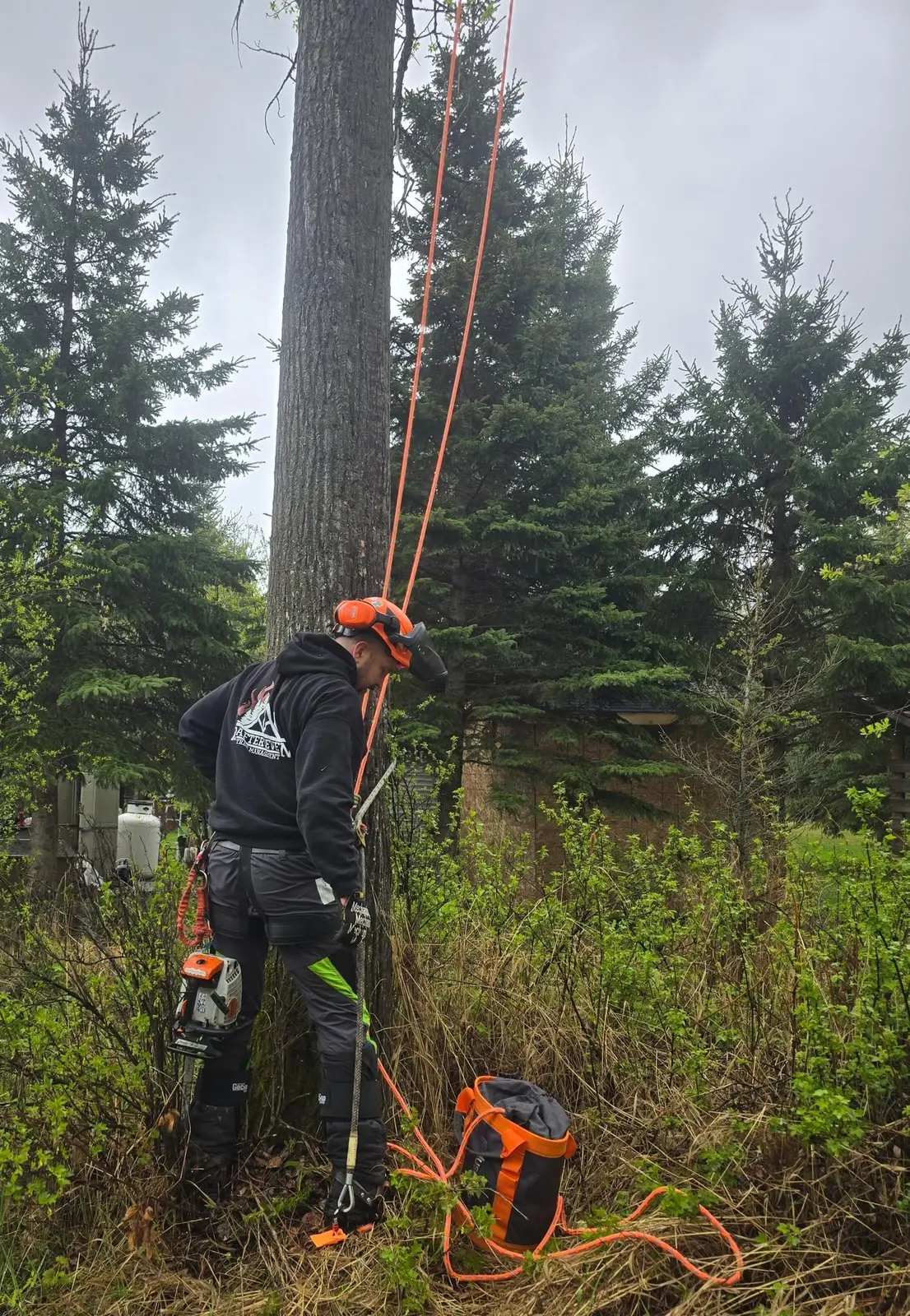
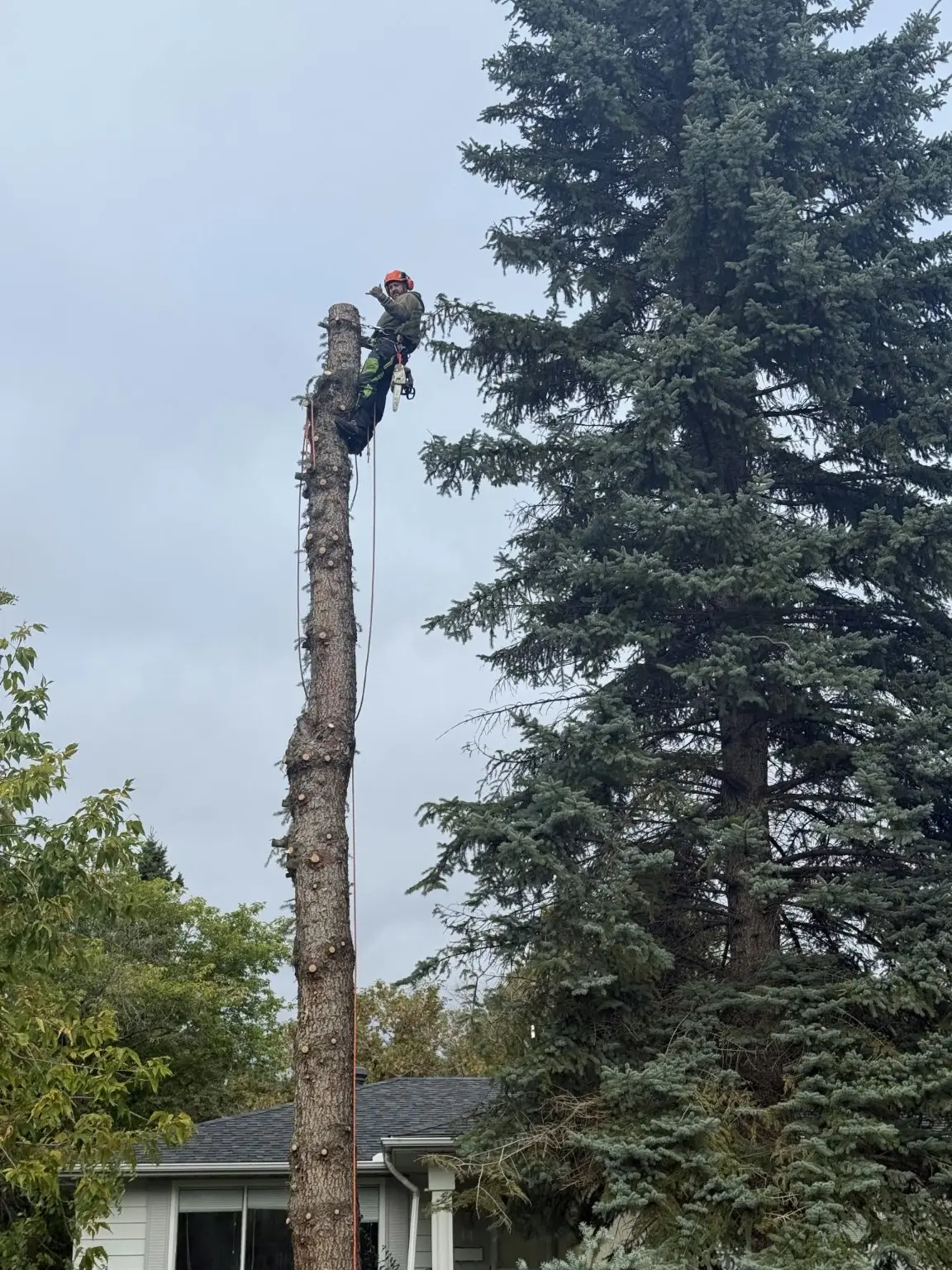
Decay, lean, storm damage, overhead utilities, fences, septic systems, buildings, livestock areas and limited access can all change how a tree should come down. We assess the tree and its surroundings first, then select the safest practical method—direct felling when the drop zone allows it, or climbing and sectional dismantling where it does not.
Dead, dying, damaged or compromised trees that threaten homes, outbuildings, fences, roads, animals or active areas.
Rope-access removal and controlled lowering when branches or trunk sections cannot safely be allowed to fall freely.
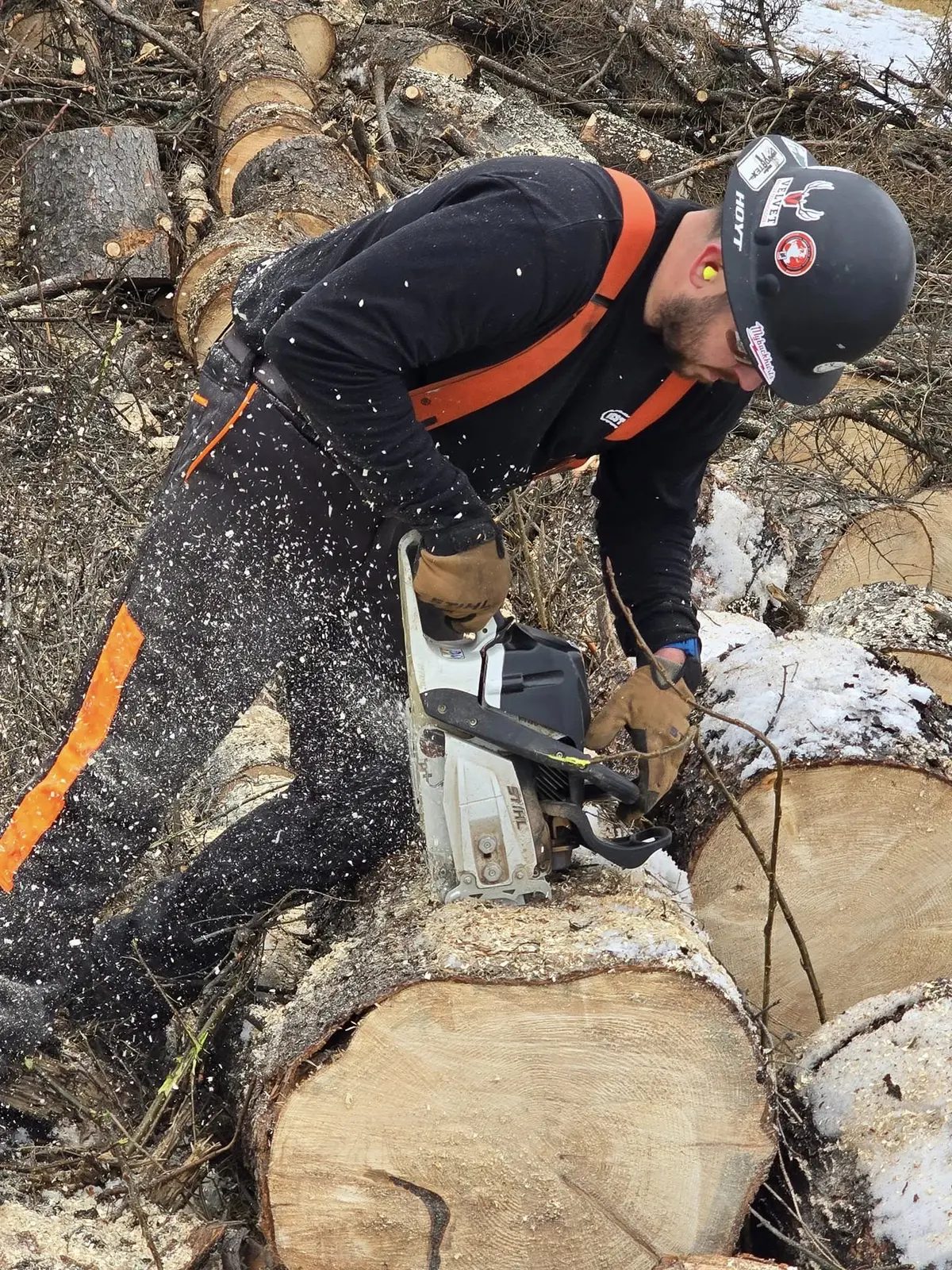
Skilled ground-based felling for trees with an appropriate drop zone, planned around lean, defects, wind and targets.
Low-impact methods for acreages, backyards and sites where bucket trucks or heavy machinery cannot reasonably reach.
Assessment and removal of storm-damaged, burnt or newly unstable trees, scheduled according to urgency, conditions and crew safety.
Planned removal for acreages, commercial property, farm sites and larger stands, with day-rate felling available where the site and drop zones allow it.
How the work is planned
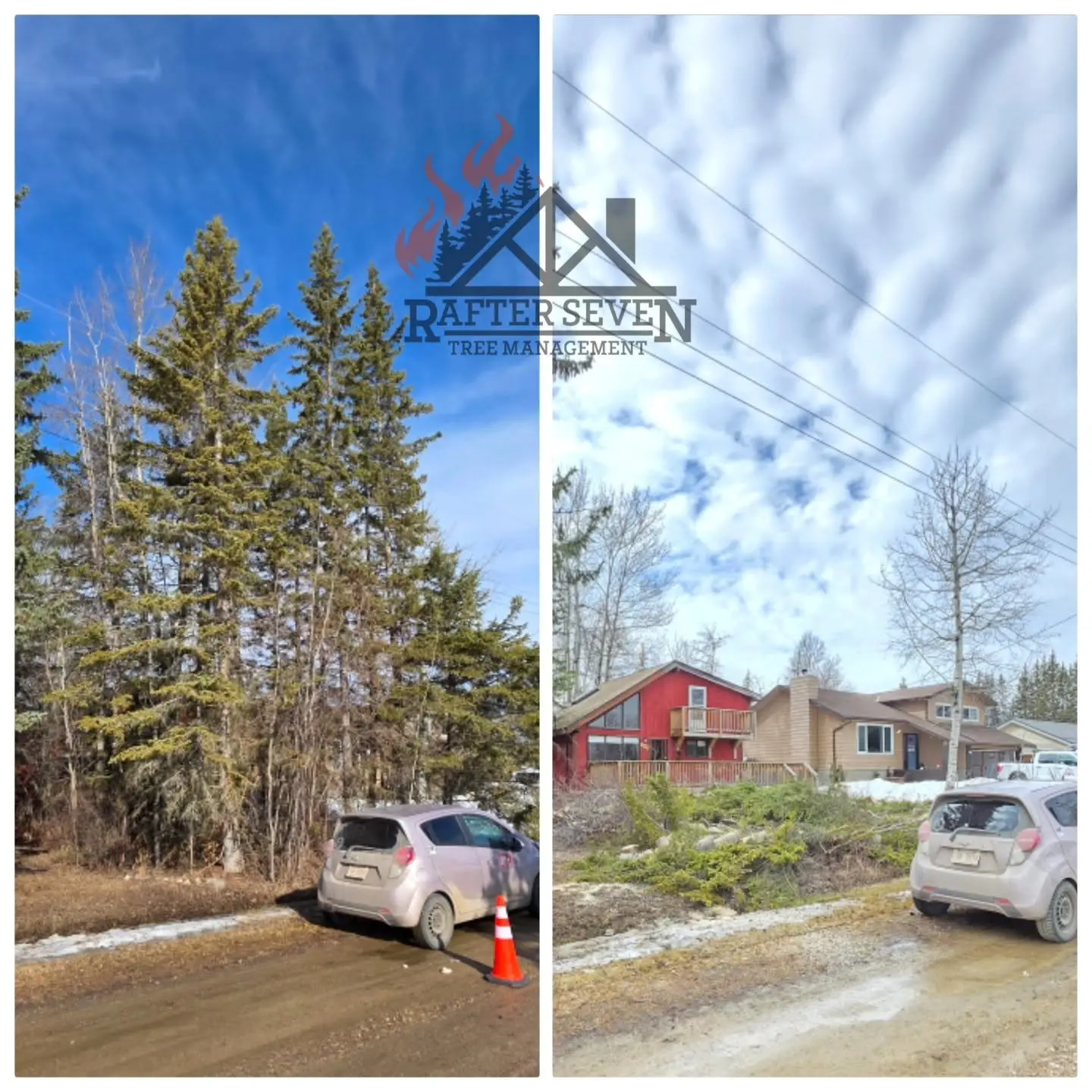
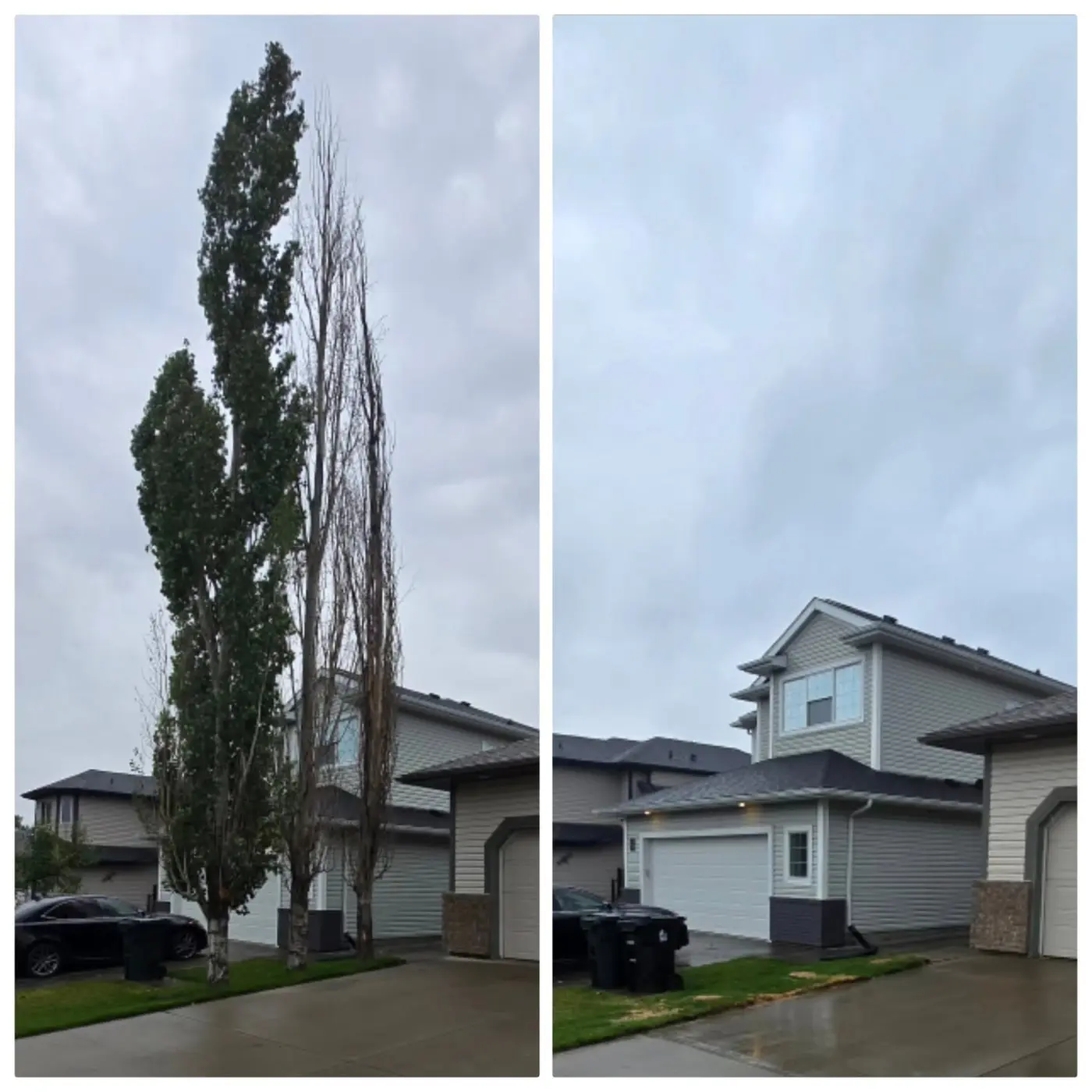
We do not force every project into the same equipment package. A sound plan accounts for the tree, targets, access, weather, work zone and what the property should look like when the crew leaves.
Cleanup options
Material handling is scoped to the property, your budget and what you want to keep.
Depending on access and the quote, logs can be bucked and stacked, branches and other material can be staged on site, or the material can be removed. Raise any preferred firewood lengths or staging areas during the assessment so the final scope is clear.
Where suitable properties have safe drop zones for efficient ground-based work, larger felling projects may be quoted by crew day rate rather than pricing every tree individually. Site conditions and safety determine whether that model fits.
Selective trimming and deadwood removal are available as an add-on to removal work; we do not offer standalone trimming. Stump grinding and forestry mulching can be coordinated through trusted subcontractors when the project requires them. ISA Certified Arborists are engaged when formal arboricultural assessment or documentation is required.
“Using pulleys and careful planning, he threaded the needle without damage to anything.”
Lauren Corscadden · Facebook recommendation
Common questions
Yes. Reduced winter rates are available for eligible felling projects when the work can be completed safely from the ground. We do not perform climbing work when trees are frozen. Weather, access, tree condition and crew safety always determine whether work proceeds.
Yes. On-site estimates are free within our regular service area, approximately 250 km from Spruce Grove. Larger projects outside that area are considered case by case.
No. Photos and the property location help us understand the request, but a dependable quote follows an in-person assessment of the tree, access, targets and material-handling scope.
Yes. Constrained sites are a core part of our work. The assessment determines whether the tree can be felled directly or should be climbed and dismantled in sections.
Stump grinding is available through trusted subcontractors and can be coordinated within a larger removal project.
Our regular service area includes communities, counties and rural properties within approximately 250 km of Spruce Grove. Larger, specialized or multi-day projects may be considered elsewhere in Alberta.
Tell us what concerns you
Send the property location, a short description and photos if you have them. On-site estimates are free within our regular 250 km service area.